2026 The 8th International Conference on Video, Signal and Image Processing (VSIP)

Brief Description
Session Organizers
Sepcial Session Topics
The topics of interest include, but are not limited to: Submission Method
Introduction of Session Organizers
Intelligent visual perception technologies, represented by vision foundation
models, have profoundly transformed the research paradigms of computer
vision and signal processing. Meanwhile, the rise of the low-altitude
economy and the rapid development of embodied intelligence have opened vast
application spaces for visual perception and understanding. This special
session aims to build a high-level academic exchange platform, bringing
together the latest achievements and frontier thinking of global researchers
in intelligent visual perception. The session focuses on vision foundation
models, low-altitude intelligent visual perception, embodied intelligence
vision, multi-modal fusion and understanding, efficient visual computing,
open-world visual perception, and trustworthy AI for visual perception,
covering the complete chain from theoretical innovation to system
implementation. We welcome research on visual perception mechanisms in
complex real-world scenarios, visual understanding in open and dynamic
environments, and application studies of visual intelligence in critical
domains such as smart cities, low-altitude logistics, autonomous driving,
intelligent robotics, and industrial inspection, pushing visual perception
technologies toward greater generality, robustness, and trustworthiness.
Prof. Wanli Xue, Tianjin University of Technology, China
Prof. Chunwei Tian, Harbin Institute of Technology, China
Postdoctoral Researcher Zhibin Zhang, Tianjin University of Technology, China
• Vision Foundation Models and Large-scale Vision Models
• Low-Altitude Intelligent Visual Perception and Understanding
(UAV/Low-altitude Platform Vision)
• Embodied Intelligence Vision and Robotic Perception
• Multi-Modal Visual Fusion and Cross-Modal Understanding
• Open-World Visual Perception and Continual Learning
• Efficient Visual Computing and Edge Intelligence Deployment
• Trustworthy AI, Explainability and Fairness in Visual Perception
• Applications of Visual Perception in Smart Cities, Autonomous Driving and
Industrial Inspection
Submit your Full Paper (no less than 8 pages) or your paper abstract—without
publication (200–400 words)—via the
Online Submission
System, then choose Special Session 3 (Intelligent Visual Perception and Understanding).
Template Download
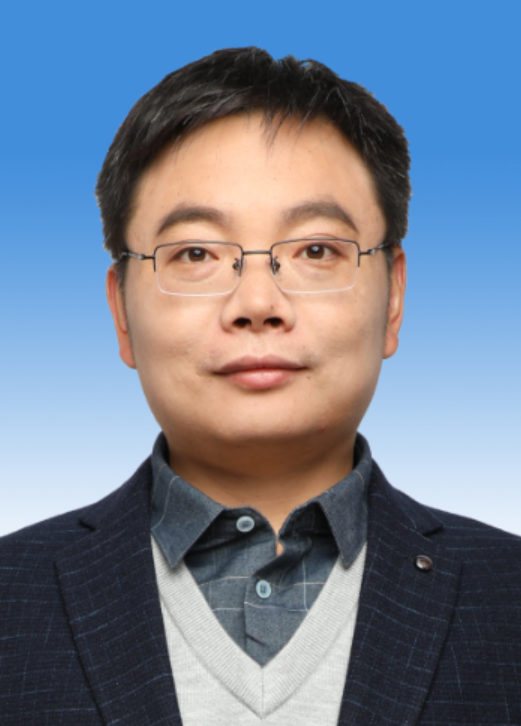 Prof. Wanli Xue
Tianjin University of Technology, China
Wanli Xue is a Professor and Ph.D. supervisor in Computer Science at Tianjin
University of Technology. His research centers on computer vision for social
good, especially UAV perception and continuous sign-language recognition for
barrier-free communication. He has authored 30+ IEEE/Elsevier journal
papers, including IEEE T-IP, IEEE T-NNLS, IEEE T-CSVT, IEEE T-MM, IEEE T-ITS
and Information Fusion, Pattern Recognition, CVPR, ECCV, etc.. Prof. Chunwei Tian
Harbin Institute of Technology, China
Chunwei Tian is a Professor and Ph.D. supervisor in the School of Computing,
Harbin Institute of Technology, listed among the world’s top 2% scientists
from 2022-2024. His research spans video/image restoration and recognition,
image generation. He has published 90+ papers in IEEE Transactions, Pattern
Recognition, Neural Networks and Information Fusion, including 7 ESI highly
cited papers and benchmark studies on image super-resolution.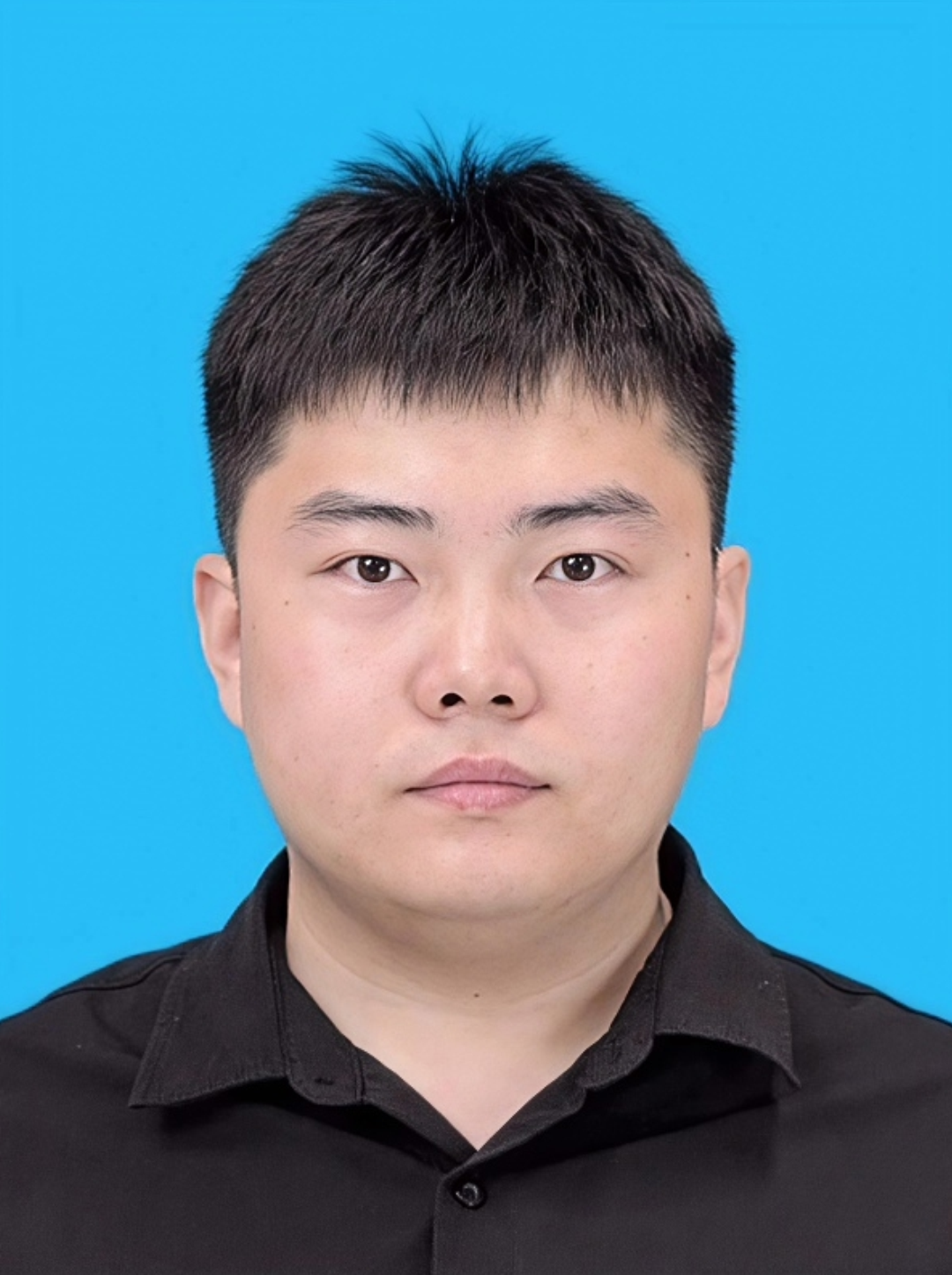 Postdoctoral Researcher Zhibin Zhang
Tianjin University of Technology, China
Zhibin Zhang is a Postdoctoral Researcher at Tianjin University of
Technology. His research focuses on visual object tracking, low-altitude
intelligent visual perception, open-world visual understanding, and embodied
intelligence vision. He has published multiple papers in top-tier journals
including IEEE TNNLS, IEEE TMM, and CCF T1 Chinese journals such as Journal
of Computers. He won 1st place in the Ten-Billion-Pixel Video Object
Tracking Challenge (Tsinghua University, 2024) and 3rd place globally in the
International Long-term Tracking Challenge (ECCV, 2022). He holds 1
invention patent and 2 software copyrights.
 vsip_contact@126.com
 +86-18080013977