2026 The 8th International Conference on Video, Signal and Image Processing (VSIP)

Brief Description
Session Organizers
Sepcial Session Topics
The topics of interest include, but are not limited to: Submission Method
Introduction of Session Organizers
The emergence of immersive media, including light field, point cloud,
panoramic, and stereoscopic video and images, is reshaping how we perceive
and interact with visual content. However, the high-dimensional and complex
nature of immersive data poses significant challenges in processing,
analysis, and representation. Artificial intelligence (AI), particularly
deep learning, has recently demonstrated remarkable potential in addressing
these challenges, enabling intelligent solutions for enhancement,
compression, reconstruction, depth extraction, and quality assessment.
This special session focuses on AI-driven techniques for immersive video and
image processing. The theme is highly relevant as industries such as virtual
reality (VR), augmented reality (AR), autonomous driving, telemedicine, and
surveillance increasingly rely on intelligent processing of immersive visual
data. By leveraging AI, researchers can achieve more efficient compression,
higher-fidelity reconstruction, robust depth estimation from stereo or
panoramic inputs, and perceptually optimized quality evaluation.
The motivation for organizing this session at VSIP 2026 is to bring together
cutting-edge contributions that explore the intersection of AI and immersive
imaging. We aim to highlight recent breakthroughs, identify open challenges
(e.g., generalization across domains, real-time performance, and limited
annotated datasets), and foster collaborations between academia and
industry. This session will serve as a vibrant platform to advance AI-driven
methodologies and accelerate the deployment of immersive visual technologies
in real-world applications.
Prof. Deyang Liu, Anqing Normal University, China
Assoc. Prof. Xinpeng Huang, Shanghai University, China
Assoc. Prof. Chao Yang, Shanghai University, China
Assoc. Prof. Hongwen Yu, Shanghai University, China
Dr. Yifan Mao, Shanghai University, China
• Light field image/video processing
• Dynamic/static point cloud processing
• Panoramic image/video processing
• 3D and stereoscopic image/video processing
• Depth estimation and depth extraction for immersive content
• AI-driven image quality assessment for immersive media
• Image restoration and enhancement
• Image semantic segmentation for 360° or 3D scenes
• Compression with deep learning for immersive applications
• Biomedical image processing using immersive techniques
Submit your Full Paper (no less than 8 pages) or your paper abstract—without
publication (200–400 words)—via the
Online Submission
System, then choose Special Session 4 (AI-Driven Immersive Video and Image Processing: Techniques and Applications).
Template Download
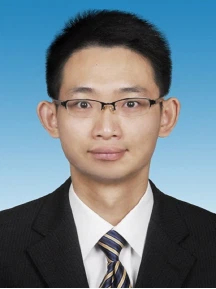 Prof. Deyang Liu
Anqing Normal University, China
Deyang Liu is a full professor at Anqing Normal University, a distinguished
research fellow at the Institute of Advanced Technology of University of
Science and Technology of China, and a visiting scholar at the University of
Technology Sydney . He has been recognized as an Outstanding Young Scholar
of Anhui Province, and a Young Taishan Scholar of Shandong Province. His
research interests span a range of topics in 3-D video processing, light
field image processing and video coding. He has authored more than 60 papers
in highly refereed conferences and journals, and holds 19 authorized
invention patents. He is a recipient of the Second Prize for Science and
Technology Progress from the China Society of Image and Graphics, the Second
Prize for Technological Innovation from the China General Chamber of
Commerce, and the Second Prize of Natural Science Award from the Anhui
Computer Federation (ACF).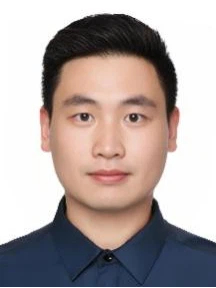 Assoc. Prof. Xinpeng Huang
Shanghai University, China
Xinpeng Huang is a full Associate Professor at Shanghai University. His
research focuses on light field data coding, enhancement, and evaluation. He
has been selected for the Shanghai "Super Postdoctoral" Program and have
received consecutive NSFC funding (Young Scientist and General Programs), as
well as 2 China Postdoctoral Science Foundation grants. He has published
over 80 papers (over 20 as first/corresponding author) in top venues
including IEEE TCSVT and TMM. He holds 19 authorized invention patents. His
students have received Best Paper Candidate award at IEEE VCIP 2024 and Best
Paper awards IFTC 2025, and a Gold Award at the IEEE ComSoC MMTC
Competition. His industry‑collaboration outcomes have earned the Second
Prize for Technological Innovation from the China General Chamber of
Commerce, and the Second Prize of Natural Science Award from the Anhui
Computer Federation (ACF).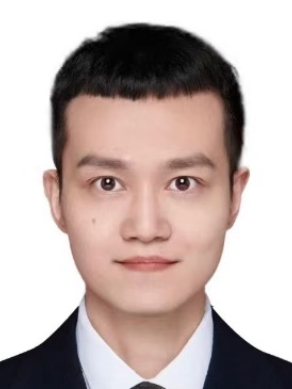 Assoc. Prof. Chao Yang
Shanghai University, China
Chao Yang received the B.E. and Ph.D. degrees from the School of
Communication and Information Engineering, Shanghai University, Shanghai,
China, in 2012 and 2017, respectively. From Nov. 2017 to Oct. 2018, he was a
Post-Doctoral Fellow with the School of Electrical Engineering System,
University of Southern California, Los Angeles, CA, USA. He is currently an
Associate Professor with the School of Communication and Information
Engineering, Shanghai University. His current research interests include
video processing, video compression, and image quality assessment.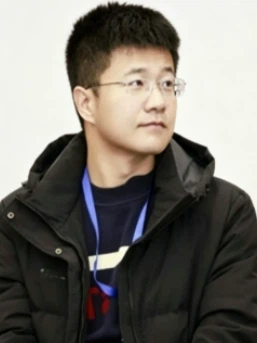 Assoc. Prof. Hongwen Yu
Harbin Institute of Technology, China
Hongwen Yu is an Associate Professor at the School of Communication and
Information Engineering, Shanghai University. He received his Ph.D. degree
in electronic engineering from the University of Technology Sydney in 2022,
and his Ph.D. degree in communication and information engineering from
Shanghai University in 2020. He has been recognized as a Shanghai High-Level
Talent (Overseas) in 2022 and selected for the Shanghai "Rising Star"
Program (Youth Sailing Special Program) in 2023.
His research interests span B5G/6G wireless communications, artificial
intelligence, and embodied intelligence. He has published more than 30
papers in academic journals, with multiple papers as first author in
top-tier signal processing journals including IEEE JSAC, IEEE TWC, and IEEE
TCOM. He also serves as a reviewer for IEEE TSP, IEEE TWC, IEEE TCOM, and
IEEE TVT.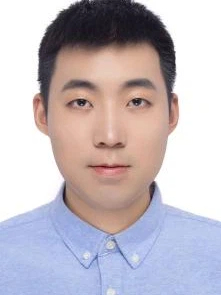 Dr. Yifan Mao
Shanghai University, China
Yifan Mao is a Ph.D. student at Shanghai University, supervised by Prof.
Ping An. He earned his Master of degree from Anqing Normal University under
the guidance of Prof. Deyang Liu. His core research focuses on light field
image technology, mainly covering low-level visual restoration and image
quality evaluation. He has published over ten papers in journals and
conferences including IEEE TVCG, IEEE TIP and IEEE TCSVT. He was selected as
Anhui Provincial Outstanding Graduate in 2024, and his master's thesis was
awarded excellent thesis honor by Anhui Provincial Computer Society.
 vsip_contact@126.com
 +86-18080013977